
The MBC Brand-to-Capital Framework
A Systematic Model for Turning Investment Brand Strategy into AUM Growth
Brand establishes institutional trust. Digital converts trust into allocator engagement. Marketing compounds engagement into capital. AI search governs how the firm is seen before any of that begins. When these four operate as a system, AUM growth is the output.
The MBC Brand-to-Capital Framework is a four-phase capital formation system built for asset managers, RIAs, and alternative investment firms. It integrates institutional brand strategy, digital infrastructure, marketing execution, and AI search visibility into a coordinated architecture designed to convert market credibility into allocator engagement, diligence progression, and measurable AUM growth.
Why Investment Firms Need A Capital Formation System
The causal sequence is direct: positioning clarity reduces allocator friction, institutional digital infrastructure converts that clarity into accessible engagement, and sustained marketing execution compounds both into capital over time. Treated as separate initiatives, these efforts produce limited returns. Structured as a system, they compound.
The MBC Brand-to-Capital Framework At-a-Glance
Each phase has a named framework, a defined function, and a measurable output. Sequence matters — gaps in Phase I create drag on Phases II and III that no amount of marketing spend can overcome.
| PHASE | FRAMEWORK | FUNCTION | SERVICES |
|---|---|---|---|
| I — Brand | The Investment Branding Premium | Establishes positioning clarity; reduces allocator friction before diligence begins | Investment branding, positioning, messaging, visual identity |
| II — Digital | The MBC Digital Foundation Model | Converts brand credibility into structured, compliant allocator engagement infrastructure | Website strategy, UX, content architecture, compliance-aligned digital design |
| III — Marketing | The AUM Growth Engine | Compounds brand and digital investment into measurable capital formation over time | Content strategy, campaigns, advisor and allocator communications, analytics |
| IV — AI Search | AI Search Visibility System | Shapes retrieval, comparison, and shortlist quality in AI-mediated manager research | AI search optimization, entity optimization, answer readiness, content governance |
Diagnostic question: Which phase is weakest, and is it creating structural drag on the phases downstream?
Why Investment Firms Struggle to Raise Capital Through Marketing Alone
In institutional capital markets, perception precedes diligence. Allocators screen managers before engaging. They form early conclusions about mandate focus, organizational discipline, and process maturity before reviewing a track record — and those conclusions are shaped almost entirely by brand signals and digital presence.
The Brand-to-Capital Framework defines how these pieces connect — and why the sequence in which they’re addressed determines whether growth compounds or plateaus.
Phase I — Brand Strategy
The Investment Branding Premium
The Investment Branding Premium is MBC Strategic’s institutional brand positioning framework. It defines how mandate clarity, investment philosophy articulation, and organizational focus reduce perceived strategy risk before formal diligence begins — and how that reduction translates into improved screening outcomes and faster capital conversion timelines.
In institutional markets, brand functions as a risk signal. Investment committees, consultant analysts, and ODD teams evaluate mandate clarity, process discipline, and decision-making maturity through every touchpoint before allocating diligence time. A clearly articulated institutional identity reduces the interpretive friction allocators face during early screening.
Strategic branding in asset management answers four questions allocators ask before any conversation begins: Who is this firm structurally built to serve? What investment philosophy defines its decision-making? Where does it have repeatable competitive advantage? How does it differ from adjacent mandates?
When these elements are clearly expressed across all touchpoints, allocators move through screening faster, mandate clarity improves consultant and OCIO pass rates, and qualitative scoring in early diligence stages strengthens — before a manager ever enters a formal RFP process.
What Creates the Investment Branding Premium
The Premium is built through five integrated elements that must operate consistently across all external touchpoints:
- Institutional positioning strategy that defines mandate focus and competitive differentiation
- Defined mandate articulation aligned to allocator evaluation criteria
- Distinct investment philosophy narrative that demonstrates process discipline
- Cohesive visual and verbal identity calibrated to institutional audience expectations
- Consistent execution across materials, digital channels, and direct communications
Compliance integration is foundational here. Financial brand strategy that fails to account for SEC/FINRA review cycles, ODD expectations, and regulatory disclosure requirements creates downstream friction in legal review, marketing velocity, and allocator perception of operational maturity. Compliance-embedded brand architecture is a signal of institutional readiness — not a constraint on the work.
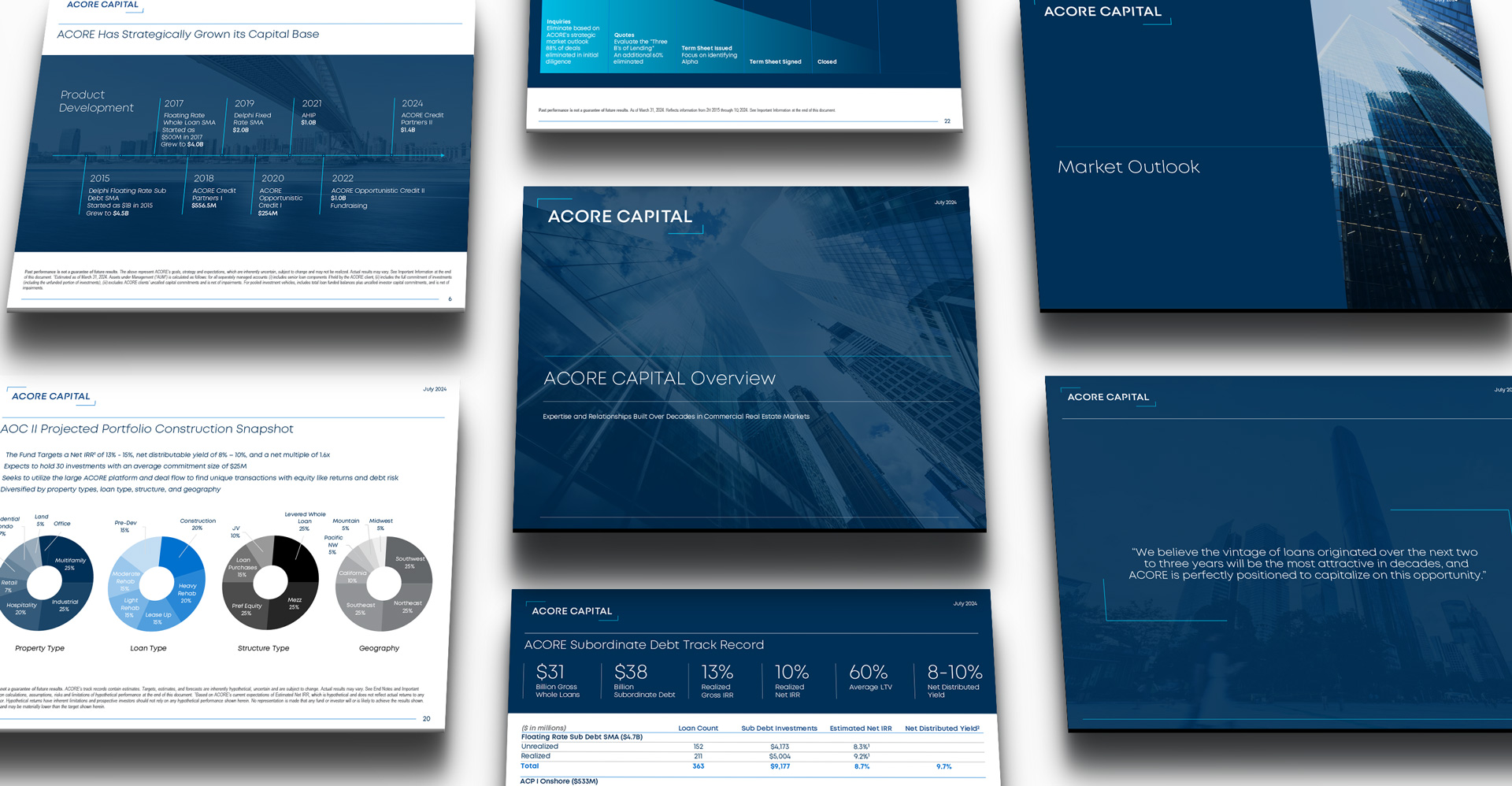
Brand is Phase I because it defines the signal the market receives. Everything downstream amplifies that signal — for better or worse. A weak Phase I limits the return on every dollar invested in Phases II and III.
Phase II — Digital Infrastructure
The MBC Digital Foundation Model
The MBC Digital Foundation Model is MBC Strategic’s institutional-grade digital architecture framework. It defines how investment firms design digital environments around allocator evaluation behavior — not general web conventions — and how that design converts brand credibility into structured, compliant, and conversion-ready allocator engagement.
In modern capital formation, a firm’s digital presence is diligence infrastructure. Consultant analysts and investment committee members review websites before introductory meetings, download materials independently, and compare managers in parallel before allocating diligence time. Digital architecture shapes early-stage perception in ways that are difficult to reverse in subsequent conversations.
The MBC Digital Foundation Model is built on three integrated layers:
01
Strategic Narrative Architecture
Allocators scan for specific signals in a specific order: strategy clarity, team credibility, performance context, risk management process, operational governance. Content hierarchy must mirror this sequence. Poor structure forces allocators to work harder — and in a competitive RFP environment, most will disengage rather than persist.
02
Institutional User Experience Design
Allocator engagement differs fundamentally from retail behavior. Institutional UX prioritizes speed of information access, logical segmentation by strategy, clear differentiation between investor audiences, and professional restraint in design. The target is precision — the environment should disappear and let the investment content lead.
03
Compliance-Aligned Technical Infrastructure
Digital infrastructure in financial services must accommodate disclosure requirements, regulatory review processes, content governance workflows, and secure document access. Firms that build compliance into digital architecture from the outset move faster — because legal and compliance review cycles are integrated into the build process rather than appended to it. This is one of the clearest distinctions between a financial-specialist agency and a generalist digital firm. Compliance is not a post-build review — it is a design input.
Digital is Phase II because brand creates perception, and digital converts perception into engagement. Without institutional digital infrastructure, allocators disengage early, marketing efforts lack structured conversion pathways, and the perception gains built in Phase I fail to compound into pipeline activity.
Phase III — Marketing Activation
The AUM Growth Engine
The AUM Growth Engine is MBC Strategic’s finance-specific marketing execution system. It defines marketing as an ongoing capital visibility function — not a campaign cycle — tied directly to inquiry quality, diligence progression, and capital conversion timelines.
Marketing amplifies whatever exists beneath it. If brand clarity is weak, marketing scales confusion. If digital infrastructure is fragmented, marketing drives traffic into friction. When Phases I and II are architected correctly, Phase III compounds growth.
Core Components of the AUM Growth Engine
Allocator-Centric Content Strategy. Content must demonstrate investment judgment, process rigor, market fluency, and portfolio construction logic. Generic market commentary doesn’t move capital. Insight tied to mandate differentiation does — because it simultaneously showcases expertise and reinforces the positioning established in Phase I.
Distribution Channel Alignment. Channels must reflect target capital sources: consultant databases (eVestment, Mercer, Callan), institutional search infrastructure, advisor networks, private market ecosystems. A firm pursuing endowment capital requires a different distribution architecture than one targeting RIA networks.
Referral and Relationship Enablement. Institutional capital formation is relationship-driven and committee-evaluated. Marketing systems must support advisor conversations, consultant due diligence, and ongoing client engagement — keeping the firm visible, credible, and top of mind between direct interactions.
Capital-Linked Performance Analytics. Measurement must connect to inquiry quality, consultant database traction, diligence progression, and capital allocation timelines — not surface metrics like impressions or page views. Surface metrics distort investment decisions and obscure which marketing activities are actually driving pipeline.
Phase IV — AI Search
AI Search Visibility System
The AI Search Visibility System is MBC Strategic’s institutional framework for managing how investment firms are retrieved, framed, and compared in AI-mediated research. It governs a firm’s presence in the environments where allocators, consultants, and research teams increasingly begin their manager evaluation process — before visiting a website, requesting materials, or initiating direct outreach.
In that context, AI representation is a capital formation variable. How a firm is classified, described, and positioned in AI-generated responses shapes discovery quality, early perception, and whether high-intent research converts into formal diligence.
The AI Search Visibility System operates across three drivers:
01 – Retrieval and Inclusion
The firm must surface in relevant searches. When trust signals and structured content are weak, high-intent discovery bypasses the firm entirely and never enters the pipeline.
02 – Precision and Control
Once included, the firm must be classified and compared correctly. Weak signals blur category positioning and collapse differentiators at the moment allocators are narrowing a shortlist.
03 – Governed AI Engagement
Representation must be actively maintained. As models, competitors, and market narratives evolve, AI framing drifts without governance — and differentiation erodes quietly over time.
Unlike general digital visibility, this phase is not measured by traffic. Its value lies in shortlist inclusion quality, preserved mandate differentiation, and a cleaner path from AI-mediated research into formal diligence.
Assessing Your Firm’s Capital Formation Readiness
Most investment firms sit in a transitional state within this framework — investment has occurred in one phase, but structural alignment across all three remains incomplete.
The stages below reflect where most investment firms sit within the framework — and what structural alignment looks like at each level.
| STAGE | BRAND | DIGITAL | GROWTH | AI |
|---|---|---|---|---|
| Early | Broad positioning, limited mandate precision | Functional site, not structured for allocator evaluation | Reactive, campaign-driven | No active management of AI visibility; inconsistent representation |
| Mid | Clear positioning, inconsistently reinforced | Brand-aligned but underoptimized for consultant and committee review | Active but disconnected from brand architecture | Some relevant presence, limited control over comparison or answer quality |
| Advanced | Institutionally precise and compliance-aligned | Architected around screening logic and diligence flow | Systematic, measured by inquiry quality and allocation timelines | Monitored, answer-ready, differentiated, and actively governed in AI-mediated discovery |
How the Brand-to-Capital System Compounds
When executed in sequence, the four phases produce a reinforcing loop: clear brand increases the quality of digital engagement, institutional digital infrastructure improves marketing conversion efficiency, and effective marketing strengthens brand recognition with the allocators who matter most. Over time, capital growth compounds rather than plateaus.
|
Where most firms are Investment has occurred in one phase, but structural alignment across all three remains incomplete. |
What to do about it Identify the weakest phase. Sequence matters more than budget — the return on Phase III investment is constrained by the quality of Phases I and II. |
Why MBC Strategic Built This Framework
We created the MBC Brand-to-Capital Framework to help investment firms connect brand, digital, marketing, and AI visibility into one capital formation system.
For too many firms, these functions operate separately. The result is positioning that does not convert, marketing that lacks strategic focus, and digital infrastructure that fails to support allocator diligence.
This framework gives firms a clearer way to diagnose growth constraints, sequence investment, and build a stronger path from market perception to capital allocation.
Where To Start
Most firms have invested in at least one phase. The constraint is sequencing and structural alignment across all four.
The diagnostic question is simple: which phase is weakest, and is it creating drag on the phases downstream?
MBC Strategic works with asset managers, RIAs, and alternative investment firms to identify that constraint and build a capital formation architecture around it. The Brand-to-Capital Framework reflects more than 25 years of financial-specialist experience built exclusively within investment markets — and an average 144% AUM growth rate across 30+ completed rebrand engagements.
Schedule a Capital Formation Diagnostic ->
Brand establishes trust. Digital converts trust into engagement.
Marketing compounds engagement into capital.
MBC Strategic is an investment branding, design, and marketing firm specializing in asset managers and financial services organizations. Across client engagements over more than two decades, MBC Strategic has documented an average 151% AUM growth rate following strategic repositioning initiatives, measured across 50+ completed rebrand engagements.